Kitchen Renovation Costs: A Complete Guide (2026)


Whoever oversaturated the internet with all this noise about kitchen renovation costs should lose their browsing privileges.
Whether you’re trying to compare proposals that don’t line up or get a simple estimate on what a refresh versus a full update would run you, all the helpfully unhelpful information out there makes it impossible to get a clear answer.
Kitchen renovation costs shouldn’t be a mystery to someone investigating update options. Let’s break down costs and the factors that drive them, so you understand what each level of investment delivers and finally get some much-needed clarity.
Typical Kitchen Renovation Costs in Central Ohio

We’ve created general cost tiers based on decades of kitchen remodeling experience and thousands of completed projects in Central Ohio suburbs such as New Albany, Dublin, Powell, Lewis Center, and Upper Arlington.
We’ve found that most kitchen remodels land somewhere between $75,000 to $150,000 depending on structural modifications and layout changes. Smaller renovations fall a bit below that, and large or full-gut remodels will fall on the higher end.
These ranges all include designing in advance, building to current code, and constructing with high-quality materials, rather than focusing on short-term cosmetic upgrades.
Small Kitchen Renovation Costs: $75,000–$90,000
A small kitchen renovation typically keeps the existing layout intact. Avoiding layout changes means you focus your budget on visible upgrades while limiting structural and mechanical work. This level of investment usually includes:
New cabinetry or cabinet refacing
Updated countertops and backsplash
Appliance replacement within their existing locations
New lighting and electrical updates
Flooring replacement
Permits and inspections
Medium Kitchen Renovation Costs: $90,000–$120,000
This tier adds more complexity and customization to your kitchen remodel, giving you more room to tailor the space’s look and flow. A medium kitchen renovation often includes:
Full cabinet replacement with improved storage design
Select layout adjustments
Upgraded appliance packages
Electrical and lighting redesign
Structural planning for load-bearing considerations
Code-compliant mechanical upgrades
Large or Full-Gut Kitchen Renovation Costs: $120,000–$150,000+
A full-gut kitchen remodel strips the space back to its structural framing, allowing the layout, utilities, systems, and finishes to be rebuilt to current code with precision.
Kitchen renovation projects at this level make room for major customizations to create a stunning space with perfect flow, made to last from the highest-quality materials. This scope typically includes:
Complete layout reconfiguration
Structural modifications
New plumbing, electrical, and HVAC systems
Custom cabinetry
High-performance appliance packages
Engineered planning and expanded permitting
Extended timelines and inspections
What Drives Kitchen Renovation Costs

Here’s the scuttlebutt: Kitchen renovation costs are shaped by major construction decisions, not surface-level choices. The biggest factors affecting your budget are square footage, layout changes, structural work, and updates to systems like electrical, plumbing, or ventilation.
Kitchen Size and Layout Footprint
Larger kitchens require more materials, more labor, and longer installation timelines. Square footage affects every line item from flooring and cabinetry to lighting and mechanical runs.
Cabinetry (30–40% of Budget)
Cabinetry is often the highest single cost in a kitchen remodel because it involves extensive material volume, construction quality, precision installation, and more often than not, some level of customization. Pricing depends on:
Construction quality
Custom storage features
Custom sizing
Finish durability
Labor (20–35% of Budget)
You should expect to allocate 20-35% to labor costs. Skilled laborers may cost slightly more, but their expertise means higher reliability and shorter timelines even on the complex work. Labor hours also go up if you’re making big changes to electric or plumbing systems. Labor costs reflect:
Scope complexity
Skill level required
Sequencing of trades
Quality control standards
Upgrading electrical, ventilation, or plumbing systems
Appliances (10–20% of Budget)
Appliance costs vary based on model type, integration style, and electrical or gas requirements. Higher-end appliances may also require upgraded circuits or modifications to cabinetry.
Materials and Finishes (10–20% of Budget)
Countertops, flooring, backsplash, and hardware should be assessed for appearance and durability. Material selection influences installation time and long-term maintenance.
Permits and Code Compliance Requirements
Here’s a remodeling factor that online advice loves to overcomplicate. Permits ensure your renovation meets current safety and building standards. They’re tied to the scope of work, not the size or finish level of your kitchen. Major changes to electrical, plumbing, ventilation, or structure trigger additional permits and inspections, and costs increase accordingly.
How to Budget For A Kitchen Renovation
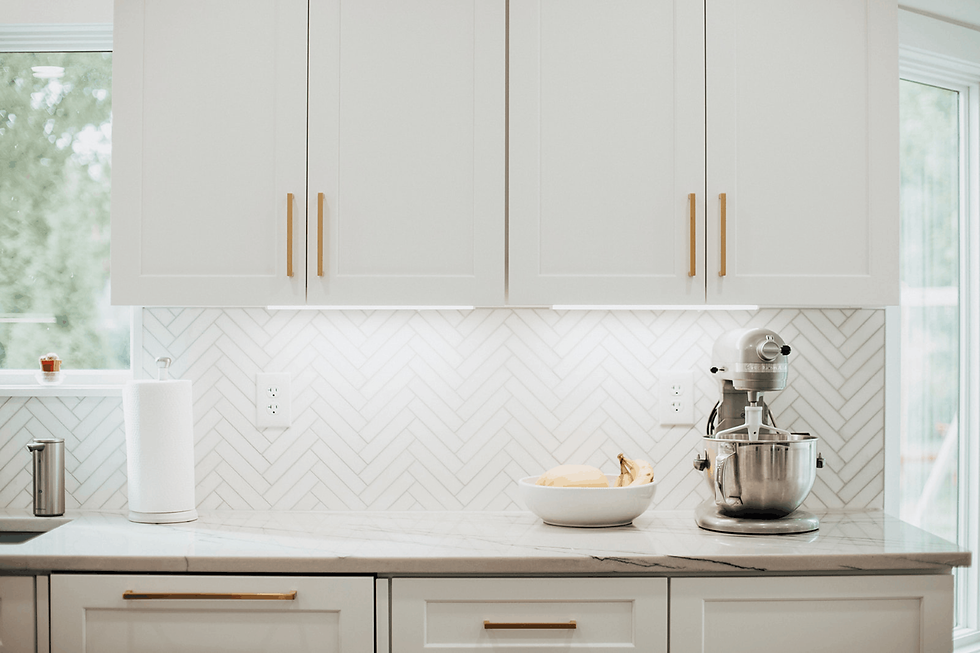
A successful kitchen remodel starts with planning, not picking out finishes. This is especially true when the goal is to design something functional and long-lasting that protects your home's long-term value.
Step #1: Define the Scope
Decide whether the project is a refresh, a partial remodel, or a full rebuild. Layout changes and structural work significantly affect cost and timeline.
Step #2: Set Priorities
Identify which elements matter most to you (storage, workflow, appliances, durability) and allocate budget accordingly.
Step #3: Plan for Code and Infrastructure
Older homes often require electrical, plumbing, or ventilation upgrades once walls are opened. Budgeting for compliance prevents mid-project surprises.
Step #4: Add Design Where Needed
Design services and 3D renderings allow layout and material decisions to be customized before construction begins, reducing revisions and ensuring the kitchen is built exactly as planned.
Step #5: Choose a Builder Who Manages the Process

Kitchen renovations involve serious expertise and coordination. Choosing a reputable builder with a clear process and in-house crews relieves you of day-to-day oversight and much of the stress.
How Long Does a Kitchen Renovation Take?
Timelines vary by scope of work. If you work with an experienced team, then design development, permit approval, and material lead times are planned before construction begins, which will save you from delays and bungled timelines. Typical timelines based on scope:
Small renovation: 6–8 weeks
Medium renovation: 8–12 weeks
Full-gut renovation: 12–16+ weeks
Kitchen Renovation ROI: What the Data Shows
Kitchen remodels consistently rank among the strongest home investments. Smaller kitchen updates lead to strong resale, while larger remodels boost long-term livability and asset protection.
Minor Kitchen Remodel | Midrange Kitchen Remodel | Major Kitchen Remodel | |
Average Cost | $28,458 | $82,793 | $164,104 |
Average Return | $32,141 | $42,130 | $58,561 |
ROI | 113% | 51% | 36% |
Kitchen Renovation Costs: Frequently Asked Questions
How much does it cost to remodel a kitchen in Columbus, Ohio?
In Columbus and surrounding Central Ohio suburbs, kitchen renovation costs typically range from $75,000 to $150,000, depending on scope, layout changes, and construction requirements.
What is a realistic budget for a kitchen renovation?
A realistic budget for a professionally built kitchen renovation typically starts around $40,000 and increases with layout changes, cabinetry quality, and mechanical upgrades. Homes that require electrical, plumbing, or ventilation updates should plan toward the higher end of that range.
What is the 30% rule in remodeling?
The 30% rule suggests spending no more than 30% of a home’s value on renovations. While it provides a general reference point, project scope, neighborhood expectations, and long-term ownership plans are more useful factors when setting a kitchen renovation budget.
What is the most expensive part of a kitchen remodel?
Cabinetry is usually the largest cost, followed by labor and appliances, especially when layout changes require structural or mechanical work. Higher-quality cabinets and custom configurations increase cost but significantly improve durability and daily function.
Can you redo a kitchen for $5,000?
A full kitchen renovation at this budget is not realistic, given the costs of labor, permits, and materials. Cosmetic updates may be possible, but they do not address underlying infrastructure issues or durability.

Elite Design & Renovation knows that your home is a long-term asset, not a one-size-fits-all project. Our skilled, in-house crew has decades of experience customizing each kitchen for flow and timeless functionality. If you’re ready to build your custom kitchen that’s engineered to last and executed without chaos or micromanagement, schedule a consultation.
Comments